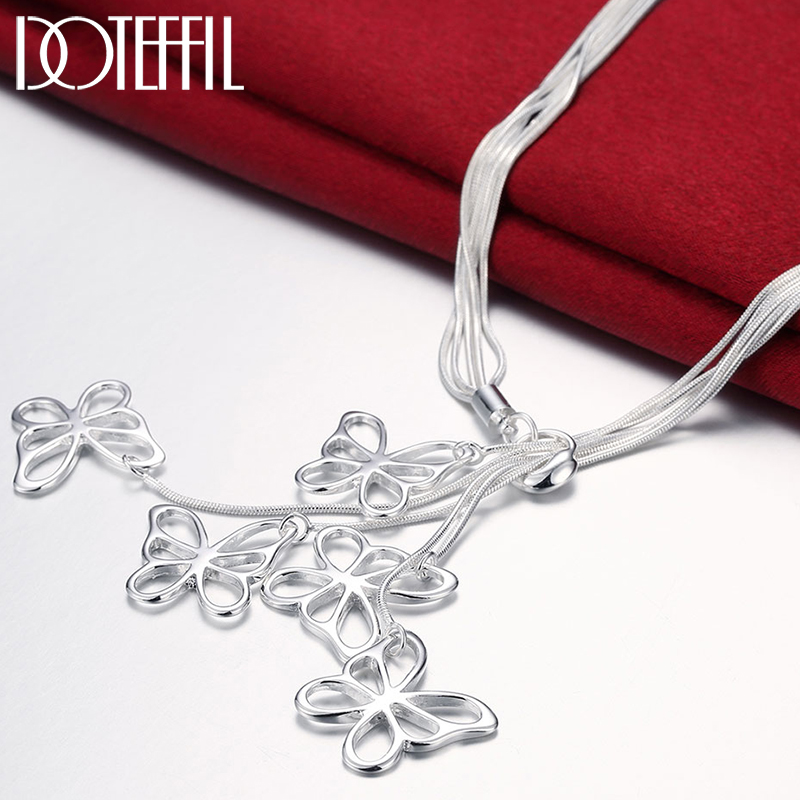
I get it. We all think we know how to shop online. We see a shiny picture, the price is low, and we hit 'Buy Now.' I thought I was being smart when I grabbed that DOTEFFIL 925 Sterling Silver Five Snake Chain Butterfly Pendant Necklace. It looked perfect for a quick, romantic gift. I should have bought a high-quality, practical item instead, like a warm knitted beanie cap.
Big mistake. The truth is, buying jewelry online—even small charm pieces—is full of hidden pitfalls. I made these mistakes so you don't have to ruin your wallet or embarrass yourself with a gift that turns green in a week. Learn from me.
I saw the price tag and thought I found a steal. The DOTEFFIL necklace features a detailed butterfly pendant on five snake chains. That sounds expensive, right? When the price is ridiculously low for something claiming to be 925 Sterling Silver, alarm bells should ring.
I thought I saved money, but I really bought a hassle. Super cheap items usually mean super thin plating. The “silver” is just a thin layer painted over cheap metal. This thin layer rubs off fast, often within days. Then, the cheap metal underneath causes skin irritation or that nasty green mark on the neck.
Verdict: If it seems too good to be true for sterling silver, it is. Budget $5 to $10 more for quality or move on. Cheap jewelry is never a true bargain.
I just read "Sterling Silver" in the name and stopped reading. I did not look for proof. This is a common error. Just saying “silver” does not make it real 925 Sterling Silver.
For something like the butterfly pendant necklace, you must confirm the quality marker. Real sterling silver should be marked 925, showing it is 92.5% pure silver. If the description is vague—like just "silver plated" or "alloy"—assume it is cheap base metal that will tarnish quickly.
If you are buying non-silver metal like stainless steel, look for 316L. This is the grade that means it is durable and hypoallergenic (less likely to cause skin problems). If the seller hides the specific material grade, they are hiding the quality.
Verdict: Always check the grade stamp (925 or 316L). If you can't find it listed in the details, don't buy it.
I looked at the star rating (four stars, great!) but skipped the detailed feedback. Big mistake. Low-rating reviews often give you the specific details the seller won't. I only looked at the shiny photos and ignored complaints about the clasp or the chain tangling.
When buying a delicate, multi-chain piece like the five-snake chain necklace, tangling is a real issue. I should have looked for reviews saying, "The chains constantly knot up" or "The clasp feels weak and keeps popping open."
To avoid my error, you must dig deep into what actual buyers say. You can often filter for buyer photos, which show the jewelry in real light, not professional studio light. Before committing to your purchase, you must be careful to see verified reviews from actual customers.
Action Step: Scroll past the first five reviews. Look for ratings below three stars. Those reviews often tell the whole story about fading, size, and broken clasps.
Ads are designed to make things look massive and heavy. The butterfly pendant, while lovely, is likely very delicate. When you see pictures where the item fills the screen, you think it has significant size and weight. I assumed the necklace would feel weighty and substantial.